


GraphQL Virtual Meetup, December 2026
Hosted by
GraphQL Virtual
Online
Link available to attendees

Ready to join in on the fun?
Agenda
- Intro (5m)
- From APIs to AI: The Power of the Graph (panel) (25m)
- Social poll (5m)
- From event storming to GraphQL (talk) (25m)
- Adjourn
From APIs to AI: The Power of the Graph
GraphQL has evolved from a flexible API technology into a foundation for building connected, reusable platforms. But its impact goes beyond the technology itself.
Join us for a conversation exploring GraphQL through three perspectives: building and scaling enterprise platforms, making GraphQL accessible through open source and developer tooling, and growing communities that drive adoption and innovation.
We’ll explore lessons learned, what makes GraphQL valuable beyond its original use cases, and why the rise of AI agents creates a new opportunity to build on existing investments.
What if AI doesn’t need a new platform, but can simply become another client of the graph?
Panelists

Sharon Gorla, moderator
Engineering leader, Starbucks
https://www.linkedin.com/in/sgorla/
Sharon Gorla is an engineering leader with a Master’s degree in Computer Science and 18 years of industry experience, specializing in platform engineering, GraphQL, and AI-ready architecture.
At Starbucks, Sharon architected and led the Next-Generation Point-of-Sale (POS) platform from proof of concept to a production solution, built on a reusable GraphQL interface layer that contributed to patented innovation. The platform is now on a path to scale across all Starbucks stores. She is currently leading efforts to enable voice AI ordering on the same platform, demonstrating her belief that AI can be just another client on the graph.

Emily Goodwin
SDE2 @ Amazon, GraphQL ambassador and Toronto GraphQL organizer
https://www.linkedin.com/in/emily-y-goodwin/
Emily Goodwin is a GraphQL ambassador and Toronto GraphQL organizer. Emily works on open-source GraphQL projects such as GraphQL Yoga and attends various GraphQL working groups. Emily started working with GraphQL in 2022 on Amazon’s Customer Service schema stitched GraphQL server which powered all of Amazon Customer Service.

Dan Boerner
Head of Customer Advocacy, Apollo
https://www.linkedin.com/in/dboerner/
Dan is Head of Customer Advocacy at Apollo GraphQL. Throughout his career, he has championed new technologies and new ways of working that help teams build better and deliver faster and mentored others doing the same. He started as a developer, earned a master’s degree in software engineering, and held CTO roles at several startups. He joined Apollo after a long tenure at Expedia as a Distinguished Technical Product Manager, where he led a series of large platform transformations, including the Travelocity, Orbitz, and Vrbo acquisition integrations, a new front-end platform, and a company-wide federated graph API.
From event storming to GraphQL
I have some opinions about building software. I combined several things from past experience, and with the expected needs for the near future. This comes together in a Rust library/framework called SkilJ. Which defaults to having a GraphQL endpoint, which is close to the event sourcing paradigms. So, mutations are translated into commands, there are events on which you can subscribe, and projections build by the events for most queries. I would like to demo SkilJ and wonder where it can go.
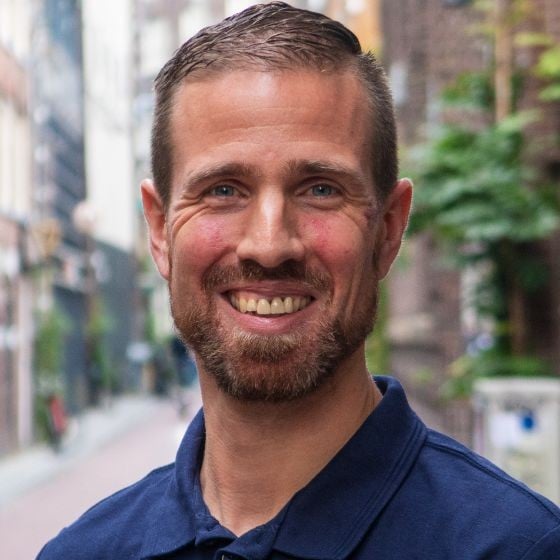
Presenter: Gerard Klijs-Nefkens
I've been a developer for about 15 years. Fell in love with GraphQL about 8 years ago. Most of the development has been in Java. I have a few open source projects in Rust. For a few months using Claude Code to accelerate those.
Platform Sponsors

Torc is a community-first platform bringing together remote-first software engineer and developer opportunities from across the globe. Join a network that’s all about connection, collaboration, and finding your next big move — together.
Join our community today!

Supercharge your dev team with AI code reviews
Get your free trial now
Ready to join in on the fun?
Platform Sponsors
Torc is a community-first platform bringing together remote-first software engineer and developer opportunities from across the globe. Join a network that’s all about connection, collaboration, and finding your next big move — together.
Join our community today!
Supercharge your dev team with AI code reviews
Get your free trial now
GraphQL Virtual Meetup, December 2026
Hosted by
GraphQL Virtual
Online
Link available to attendees
Agenda
- Intro (5m)
- From APIs to AI: The Power of the Graph (panel) (25m)
- Social poll (5m)
- From event storming to GraphQL (talk) (25m)
- Adjourn
From APIs to AI: The Power of the Graph
GraphQL has evolved from a flexible API technology into a foundation for building connected, reusable platforms. But its impact goes beyond the technology itself.
Join us for a conversation exploring GraphQL through three perspectives: building and scaling enterprise platforms, making GraphQL accessible through open source and developer tooling, and growing communities that drive adoption and innovation.
We’ll explore lessons learned, what makes GraphQL valuable beyond its original use cases, and why the rise of AI agents creates a new opportunity to build on existing investments.
What if AI doesn’t need a new platform, but can simply become another client of the graph?
Panelists
Sharon Gorla, moderator
Engineering leader, Starbucks
https://www.linkedin.com/in/sgorla/
Sharon Gorla is an engineering leader with a Master’s degree in Computer Science and 18 years of industry experience, specializing in platform engineering, GraphQL, and AI-ready architecture.
At Starbucks, Sharon architected and led the Next-Generation Point-of-Sale (POS) platform from proof of concept to a production solution, built on a reusable GraphQL interface layer that contributed to patented innovation. The platform is now on a path to scale across all Starbucks stores. She is currently leading efforts to enable voice AI ordering on the same platform, demonstrating her belief that AI can be just another client on the graph.
Emily Goodwin
SDE2 @ Amazon, GraphQL ambassador and Toronto GraphQL organizer
https://www.linkedin.com/in/emily-y-goodwin/
Emily Goodwin is a GraphQL ambassador and Toronto GraphQL organizer. Emily works on open-source GraphQL projects such as GraphQL Yoga and attends various GraphQL working groups. Emily started working with GraphQL in 2022 on Amazon’s Customer Service schema stitched GraphQL server which powered all of Amazon Customer Service.
Dan Boerner
Head of Customer Advocacy, Apollo
https://www.linkedin.com/in/dboerner/
Dan is Head of Customer Advocacy at Apollo GraphQL. Throughout his career, he has championed new technologies and new ways of working that help teams build better and deliver faster and mentored others doing the same. He started as a developer, earned a master’s degree in software engineering, and held CTO roles at several startups. He joined Apollo after a long tenure at Expedia as a Distinguished Technical Product Manager, where he led a series of large platform transformations, including the Travelocity, Orbitz, and Vrbo acquisition integrations, a new front-end platform, and a company-wide federated graph API.
From event storming to GraphQL
I have some opinions about building software. I combined several things from past experience, and with the expected needs for the near future. This comes together in a Rust library/framework called SkilJ. Which defaults to having a GraphQL endpoint, which is close to the event sourcing paradigms. So, mutations are translated into commands, there are events on which you can subscribe, and projections build by the events for most queries. I would like to demo SkilJ and wonder where it can go.
Presenter: Gerard Klijs-Nefkens
I've been a developer for about 15 years. Fell in love with GraphQL about 8 years ago. Most of the development has been in Java. I have a few open source projects in Rust. For a few months using Claude Code to accelerate those.
Get in touch!
hi@guild.host