


AI Agent 初體驗
19:10~ 19:50
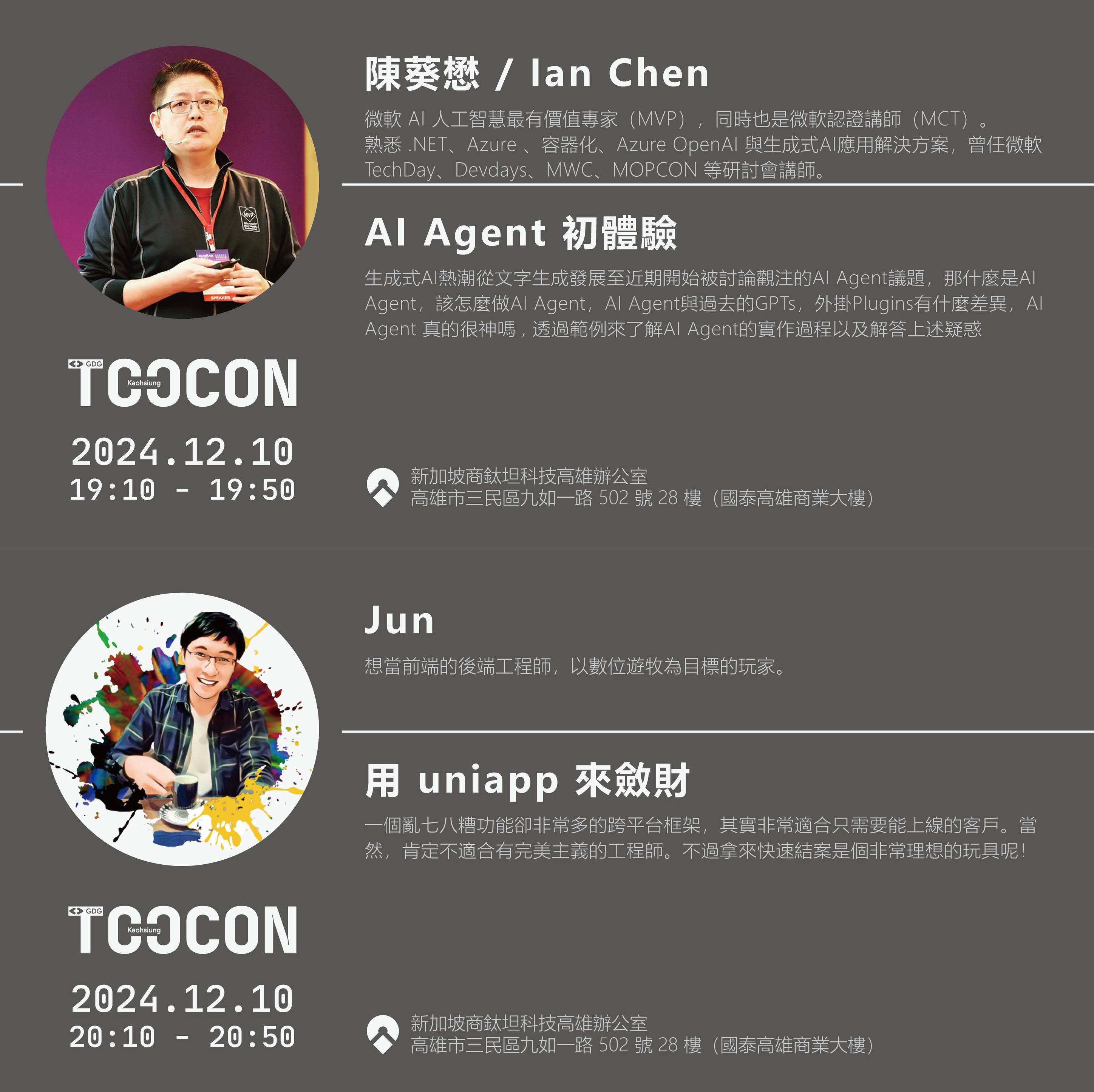
- 講者:陳葵懋 / Ian Chen
- Semantic Kernel Developers Taiwan
- 簡介: 微軟 AI 人工智慧最有價值專家(MVP),同時也是微軟認證講師(MCT)。 熟悉 .NET、Azure 、容器化、Azure OpenAI 與生成式AI應用解決方案,曾任微軟 TechDay、Devdays、MWC、MOPCON 等研討會講師。
共同著作:
- LangChain 奇幻旅程:OpenAI x Gemini x 多模態應用開發指南
- 極速 ChatGPT 開發者兵器指南:跨界整合 Prompt Flow、 LangChain 與 Semantic Kernel 框架
- 駕馭 ChatGPT 4: 探索 Azure OpenAI 與 Cognitive Service for Language 開發實踐 (使用 .NET 與 Node.js)
- 議程:AI Agent 初體驗
- 議程簡介: 生成式AI熱潮從文字生成發展至近期開始被討論觀注的AI Agent議題,那什麼是AI Agent,該怎麼做AI Agent,AI Agent與過去的GPTs,外掛Plugins有什麼差異,AI Agent 真的很神嗎 , 透過範例來了解AI Agent的實作過程以及解答上述疑惑
Google Developer Groups Kaohsiung
Google Developer Groups Kaohsiung, formerly known as the Android Kaohsiung Developer Community, was established in March 2014. We regularly host events such as BuildFast, IWD (International Women's Day), Google I/O Extended, DevFest, and TOOCON every year. Our aim is to provide a platform for software developers in Kaohsiung who are interested in exchanging ideas and networking in person. Feel free to join our Google Developer Groups Kaohsiung fan page and the GDG Kaohsiung Facebook group to stay updated on the latest events.


Platform Sponsors
Supercharge your dev team with AI code reviews
Get your free trial now

Torc is a community-first platform bringing together remote-first software engineer and developer opportunities from across the globe. Join a network that’s all about connection, collaboration, and finding your next big move — together.
Join our community today!
AI Agent 初體驗
19:10~ 19:50
- 講者:陳葵懋 / Ian Chen
- Semantic Kernel Developers Taiwan
- 簡介: 微軟 AI 人工智慧最有價值專家(MVP),同時也是微軟認證講師(MCT)。 熟悉 .NET、Azure 、容器化、Azure OpenAI 與生成式AI應用解決方案,曾任微軟 TechDay、Devdays、MWC、MOPCON 等研討會講師。
共同著作:
- LangChain 奇幻旅程:OpenAI x Gemini x 多模態應用開發指南
- 極速 ChatGPT 開發者兵器指南:跨界整合 Prompt Flow、 LangChain 與 Semantic Kernel 框架
- 駕馭 ChatGPT 4: 探索 Azure OpenAI 與 Cognitive Service for Language 開發實踐 (使用 .NET 與 Node.js)
- 議程:AI Agent 初體驗
- 議程簡介: 生成式AI熱潮從文字生成發展至近期開始被討論觀注的AI Agent議題,那什麼是AI Agent,該怎麼做AI Agent,AI Agent與過去的GPTs,外掛Plugins有什麼差異,AI Agent 真的很神嗎 , 透過範例來了解AI Agent的實作過程以及解答上述疑惑
Google Developer Groups Kaohsiung
Google Developer Groups Kaohsiung, formerly known as the Android Kaohsiung Developer Community, was established in March 2014. We regularly host events such as BuildFast, IWD (International Women's Day), Google I/O Extended, DevFest, and TOOCON every year. Our aim is to provide a platform for software developers in Kaohsiung who are interested in exchanging ideas and networking in person. Feel free to join our Google Developer Groups Kaohsiung fan page and the GDG Kaohsiung Facebook group to stay updated on the latest events.
Platform Sponsors
Supercharge your dev team with AI code reviews
Get your free trial now
Torc is a community-first platform bringing together remote-first software engineer and developer opportunities from across the globe. Join a network that’s all about connection, collaboration, and finding your next big move — together.
Join our community today!
Get in touch!
hi@guild.host