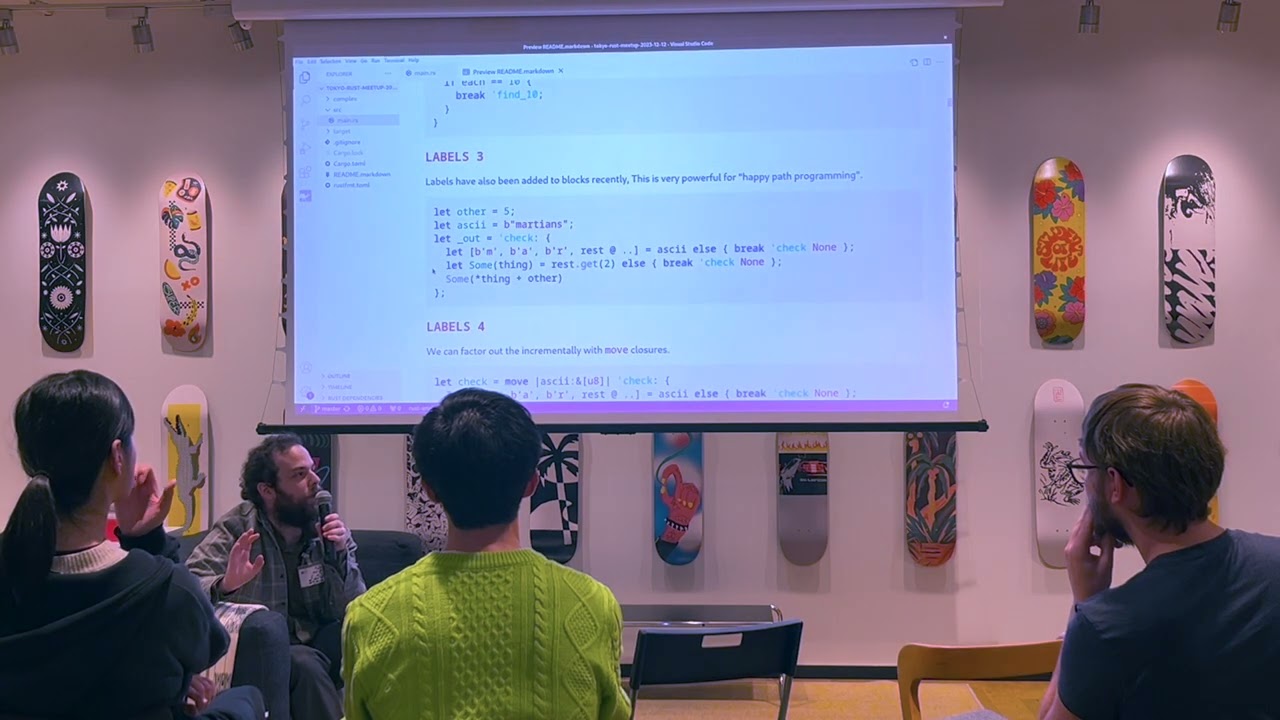


Remy Clarke (Rust Programmer at Scylla Digital) talks about his experiments - mad scientist style - saving you the time and brain cells trying to figure out these things on your own. Tame unsafe code to have no undefined behavior. Check. Define macros inside a function. Check. Leverage labels to take control of control flow. Check.
Watch to learn techniques that will bring your Rust to the next level. Master control flow with labels, and make your code amenable to refactoring. Build your own local declarative macros to work around the scoping issues of functions, closures, .await, and ?. And last but not least, use Miri to ensure that your unsafe code has no undefined behavior.
Follow along looking at the code here:
https://github.com/ClarkeRemy/tokyo-rust-meetup-2023-12-12
Core tech:
The talk will go over why client-side compute is cool and good, briefly describe how CheerpJ and CheerpX work internally (WebAssembly magic), and then discuss the various ways in which they can be used in organisations for fun and profit.
What's the point of wrapping a C++ library instead of rewriting it in Rust? Does a move mean the same thing in Rust and in C++? How is borrow checking different from smart pointers? And what the F-F-I is a foreign function interface?
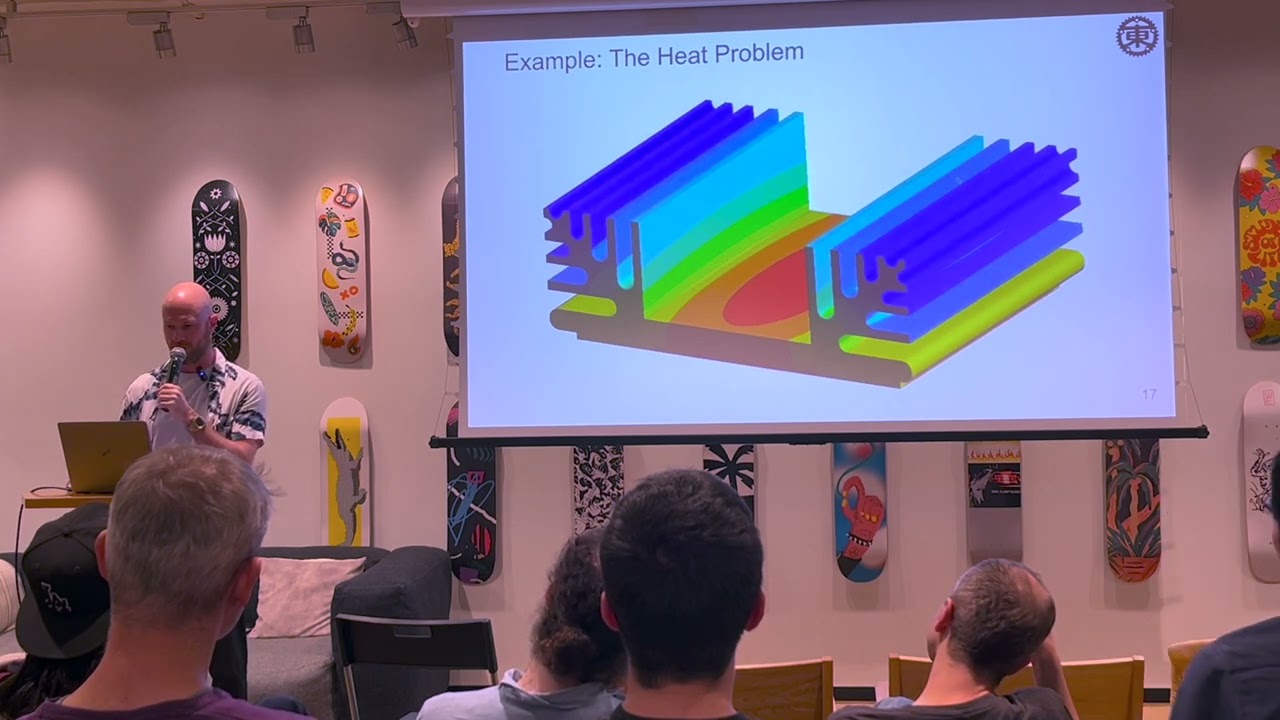
Máté Kovács (Principal Software Engineer at Braid) talks about his latest experiment to seamlessly wrap a C++ library with a Rust interface. He explains when, why, and how best to apply this approach, presenting the ideas with examples throughout a concrete codebase. Watch to learn about the differences and similarities of Rust and C++, the tools that can bridge the gap, and the concrete patterns you can use to successfully solve this problem in your own projects.
Follow along with the slides: https://mkovaxx.net/talks/wrapping-cp...
And read the code here: https://github.com/mkovaxx/mfem-rs
Platform Sponsors

Torc is a community-first platform bringing together remote-first software engineer and developer opportunities from across the globe. Join a network that’s all about connection, collaboration, and finding your next big move — together.
Join our community today!

Don't let broken lines of code, busted API calls, and crashes ruin your app. Join the 4M developers and 90K organizations who consider Sentry “not bad” when it comes to application monitoring. Use code “guild” for 3 free months of the team plan.
https://sentry.io


Remy Clarke (Rust Programmer at Scylla Digital) talks about his experiments - mad scientist style - saving you the time and brain cells trying to figure out these things on your own. Tame unsafe code to have no undefined behavior. Check. Define macros inside a function. Check. Leverage labels to take control of control flow. Check.
Watch to learn techniques that will bring your Rust to the next level. Master control flow with labels, and make your code amenable to refactoring. Build your own local declarative macros to work around the scoping issues of functions, closures, .await, and ?. And last but not least, use Miri to ensure that your unsafe code has no undefined behavior.
Follow along looking at the code here:
https://github.com/ClarkeRemy/tokyo-rust-meetup-2023-12-12
Core tech:
The talk will go over why client-side compute is cool and good, briefly describe how CheerpJ and CheerpX work internally (WebAssembly magic), and then discuss the various ways in which they can be used in organisations for fun and profit.
What's the point of wrapping a C++ library instead of rewriting it in Rust? Does a move mean the same thing in Rust and in C++? How is borrow checking different from smart pointers? And what the F-F-I is a foreign function interface?
Máté Kovács (Principal Software Engineer at Braid) talks about his latest experiment to seamlessly wrap a C++ library with a Rust interface. He explains when, why, and how best to apply this approach, presenting the ideas with examples throughout a concrete codebase. Watch to learn about the differences and similarities of Rust and C++, the tools that can bridge the gap, and the concrete patterns you can use to successfully solve this problem in your own projects.
Follow along with the slides: https://mkovaxx.net/talks/wrapping-cp...
And read the code here: https://github.com/mkovaxx/mfem-rs
Platform Sponsors

Torc is a community-first platform bringing together remote-first software engineer and developer opportunities from across the globe. Join a network that’s all about connection, collaboration, and finding your next big move — together.
Join our community today!

Don't let broken lines of code, busted API calls, and crashes ruin your app. Join the 4M developers and 90K organizations who consider Sentry “not bad” when it comes to application monitoring. Use code “guild” for 3 free months of the team plan.
https://sentry.io
Get in touch!
hi@guild.host