Multi-agent AI frameworks are everywhere right now—OpenAI Swarm, CrewAI, Langflow—but most of them are built Python-first. Meanwhile, a huge chunk of AI startups (60–70% in YC, by some counts) are building in TypeScript. And honestly, spinning up a whole Python backend just to leverage some of these frameworks didn’t feel worth it.
In this talk, I’ll walk through how we approached building a multi-agent AI system in TypeScript—by focusing on the core principles behind these frameworks and building something similar that fits the JS stack.
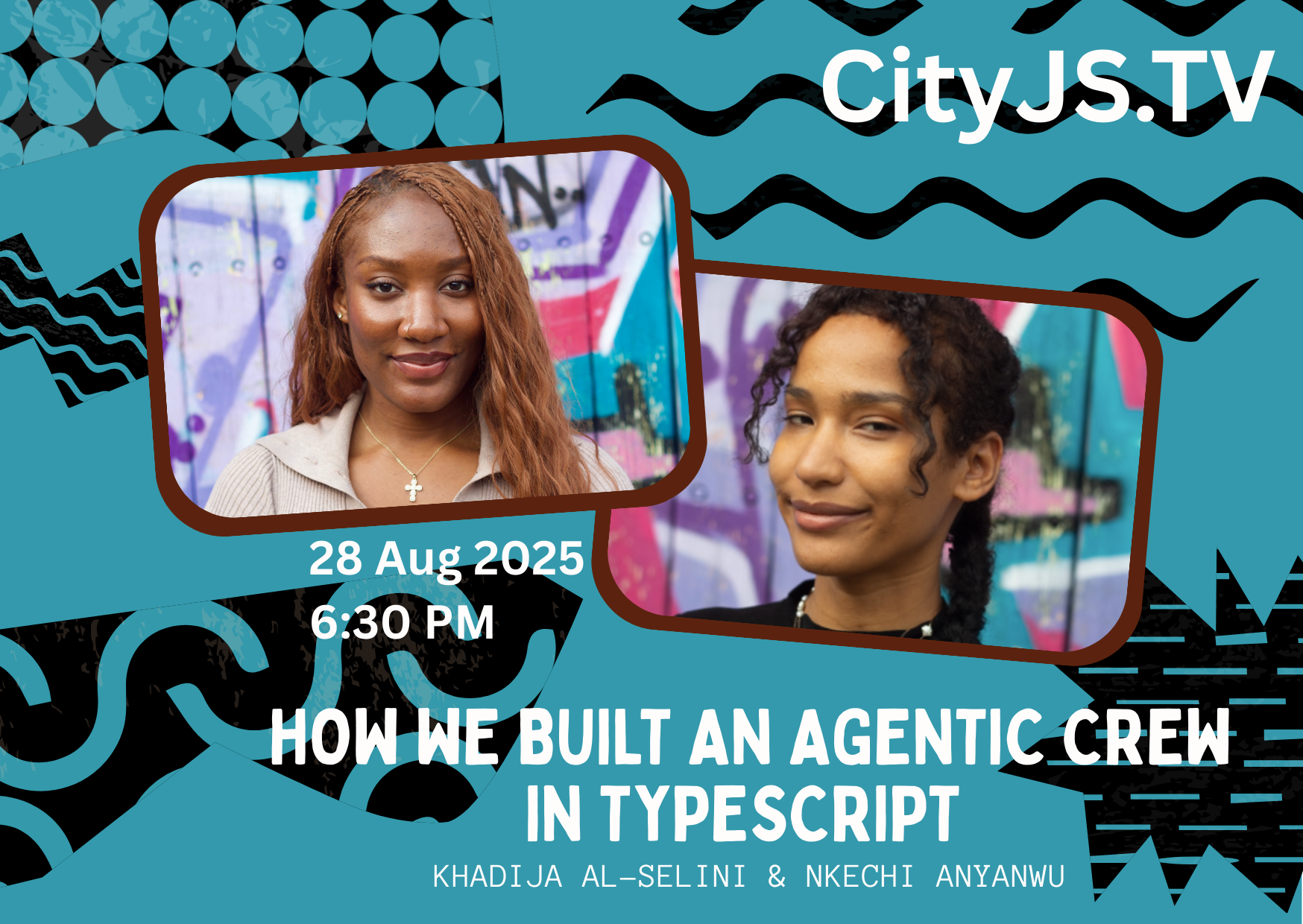

A Community Event organised by the Community, our Javascript Conference evolved from the popularity and success of a monthly meet-up put together by 4 different JavaScript groups in London, including Halfstack, JSMonthly, London JS Community, and London Node User Group.
The main organiser of the event is Aris Markogiannakis (email aris@cityjsconf.org, telephone +447809468179).
Our aim is for individuals to be updated on innovative changes around the industry and JS as an entity. You can decide to hop in and out of thought-provoking workshops/talks with CityJS Conferences the most central, and reasonably priced event to attend in London. Our aim is to continue hosting and sharing these community led events and encourage all to be a part of it, no matter background or professional creed.
Format: Technical talk with live demos, code and prompt examples
Description:
The role of the developer is fundamentally changing. We're moving from being executors who write every line of code to becoming orchestrators who conduct AI agents to build complex systems. This talk, based on my essay about transitioning from traditional coding to AI orchestration, shares practical insights from a year of experimenting with multi-agent development workflows. 🔗 Essay linked here: https://pivotech.substack.com/p/from-executor-to-orchestrator-my
Through real code examples and live demonstrations, I'll walk through my evolution from using ChatGPT for learning CS50 concepts to orchestrating Claude, Gemini CLI, and NotebookLM to build complete products. You'll discover the three distinct schools of AI development I've identified through hands-on experimentation: the One-Shot method, the Incremental approach, and my hybrid Layering technique.
I'll share the workflows I use to go from customer discovery sessions to deployed applications, including the mistakes, frustrations, and breakthroughs that shaped my approach. We'll explore the "Legacy Codebase Problem" that emerges from AI-generated code, the "Hyper-specificity Paradox" of detailed prompting, and the new skill set required to become an effective AI orchestrator.
Key Takeaways:
Three proven patterns for AI-assisted development and when to use each
Practical orchestration workflows for complex projects
The emerging skillset of the developer-orchestrator
How to maintain technical depth while leveraging AI efficiency
Real-world pitfalls and how to navigate them
Target Audience: Developers looking to evolve their practice in the age of intelligent agents. Minimal level of AI development experience required e.g. prompting Claude
Platform Sponsors

Don't let broken lines of code, busted API calls, and crashes ruin your app. Join the 4M developers and 90K organizations who consider Sentry “not bad” when it comes to application monitoring. Use code “guild” for 3 free months of the team plan.
https://sentry.io

Torc is a community-first platform bringing together remote-first software engineer and developer opportunities from across the globe. Join a network that’s all about connection, collaboration, and finding your next big move — together.
Join our community today!
Multi-agent AI frameworks are everywhere right now—OpenAI Swarm, CrewAI, Langflow—but most of them are built Python-first. Meanwhile, a huge chunk of AI startups (60–70% in YC, by some counts) are building in TypeScript. And honestly, spinning up a whole Python backend just to leverage some of these frameworks didn’t feel worth it.
In this talk, I’ll walk through how we approached building a multi-agent AI system in TypeScript—by focusing on the core principles behind these frameworks and building something similar that fits the JS stack.


A Community Event organised by the Community, our Javascript Conference evolved from the popularity and success of a monthly meet-up put together by 4 different JavaScript groups in London, including Halfstack, JSMonthly, London JS Community, and London Node User Group.
The main organiser of the event is Aris Markogiannakis (email aris@cityjsconf.org, telephone +447809468179).
Our aim is for individuals to be updated on innovative changes around the industry and JS as an entity. You can decide to hop in and out of thought-provoking workshops/talks with CityJS Conferences the most central, and reasonably priced event to attend in London. Our aim is to continue hosting and sharing these community led events and encourage all to be a part of it, no matter background or professional creed.

Format: Technical talk with live demos, code and prompt examples
Description:
The role of the developer is fundamentally changing. We're moving from being executors who write every line of code to becoming orchestrators who conduct AI agents to build complex systems. This talk, based on my essay about transitioning from traditional coding to AI orchestration, shares practical insights from a year of experimenting with multi-agent development workflows. 🔗 Essay linked here: https://pivotech.substack.com/p/from-executor-to-orchestrator-my
Through real code examples and live demonstrations, I'll walk through my evolution from using ChatGPT for learning CS50 concepts to orchestrating Claude, Gemini CLI, and NotebookLM to build complete products. You'll discover the three distinct schools of AI development I've identified through hands-on experimentation: the One-Shot method, the Incremental approach, and my hybrid Layering technique.
I'll share the workflows I use to go from customer discovery sessions to deployed applications, including the mistakes, frustrations, and breakthroughs that shaped my approach. We'll explore the "Legacy Codebase Problem" that emerges from AI-generated code, the "Hyper-specificity Paradox" of detailed prompting, and the new skill set required to become an effective AI orchestrator.
Key Takeaways:
Three proven patterns for AI-assisted development and when to use each
Practical orchestration workflows for complex projects
The emerging skillset of the developer-orchestrator
How to maintain technical depth while leveraging AI efficiency
Real-world pitfalls and how to navigate them
Target Audience: Developers looking to evolve their practice in the age of intelligent agents. Minimal level of AI development experience required e.g. prompting Claude
Platform Sponsors

Don't let broken lines of code, busted API calls, and crashes ruin your app. Join the 4M developers and 90K organizations who consider Sentry “not bad” when it comes to application monitoring. Use code “guild” for 3 free months of the team plan.
https://sentry.io

Torc is a community-first platform bringing together remote-first software engineer and developer opportunities from across the globe. Join a network that’s all about connection, collaboration, and finding your next big move — together.
Join our community today!

Get in touch!
hi@guild.host